

Can Standard Work Apply to the CEO Role? Absolutely
When we talk about standard work, most people immediately think of manufacturing floors, assembly lines, or operational teams. There is a common belief that some roles, particularly at the executive level, are too complex or dynamic to have structured routines. The idea is that CEOs and senior leaders face constant, unpredictable demands, so “standard work” cannot apply.
In my experience working with organizations across healthcare and manufacturing, I’ve consistently found the opposite to be true. Standard work is not limited to frontline operations; it can be a powerful tool for CEOs and leadership teams. In fact, when applied thoughtfully, it stabilizes leadership behavior, increases accountability, and drives continuous improvement at the highest levels of an organization.
The Reality of Executive Work
CEOs operate in a highly dynamic environment. They balance strategic priorities, stakeholder expectations, operational challenges, and organizational culture. Without structure, even the most capable executives can find themselves reacting constantly, firefighting instead of leading intentionally.
One misconception is that standard work implies rigidity. In reality, standard work is a framework that clarifies purpose, sets expectations, and creates room for reflection. For executives, it provides the same benefits it provides for operational leaders: focus, consistency, and a system for improvement.
A Real-World Example
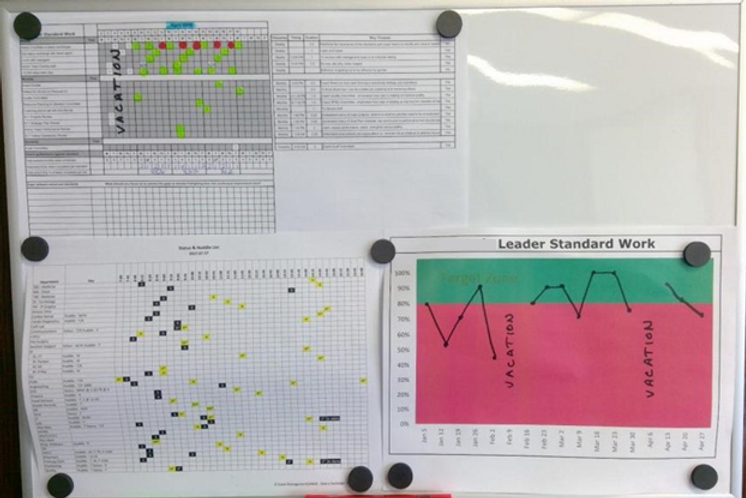
I recently visited a healthcare organization where the CEO had embraced the principles of standard work in a visible and practical way. We had previously worked together in a workshop that introduced the concept of CEO standard work, focusing on identifying high-value activities and eliminating non-value-added tasks. During my visit, I noticed something remarkable: the CEO had posted a structured document on his office door, visible to anyone walking down the hallway.
This document outlined his key activities, the purpose behind each, and the intended outcomes. It was not a checklist of trivial tasks—it was a tool for reflection and improvement. By maintaining this standard work, the CEO was able to:
- Identify activities that could be eliminated, delegated, or simplified
- Detect process defects, such as incomplete or misaligned tasks
- Prioritize actions that directly contributed to organizational goals
The Power of Visibility
What made this application of standard work particularly effective was its visibility. By placing the document in a location accessible to his team, the CEO made his routines and priorities transparent. This transparency achieved several important objectives:
- Accountability: The CEO held himself accountable to his stated routines, demonstrating discipline and intentionality.
- Cultural Influence: His team observed the process and understood that leadership work could be structured, measured, and improved over time.
- Leadership Development: By modeling standard work, he encouraged other leaders to reflect on and refine their own routines.
This approach goes beyond individual productivity. It shapes culture, reinforces values, and sets a standard for the entire organization.
Why Standard Work Matters at the CEO Level
Standard work for executives is not about micromanagement or creating rigid schedules. It is about establishing a framework that enables leaders to work effectively, make intentional decisions, and continuously improve. Here’s why it matters:
- Focus on Value-Added Activities: CEOs often face a flood of emails, meetings, and operational distractions. Standard work helps prioritize actions that deliver the most value.
- Consistency Across the Organization: When senior leaders operate consistently, it sets expectations for the entire leadership team. This alignment drives more predictable outcomes.
- Structured Reflection: Leadership work is complex. Without reflection, it is difficult to learn from successes and failures. Standard work embeds time for analysis and adjustment.
- Improved Decision-Making: By documenting and reviewing key activities regularly, executives can make data-informed decisions rather than relying on intuition alone.
Components of CEO Standard Work
The principles of standard work can be adapted to the executive level, with specific components designed to reinforce focus, accountability, and improvement:
- Define Core Responsibilities: Identify the activities that directly contribute to organizational goals. Include strategic, operational, and leadership responsibilities.
- Clarify Purpose and Outcomes: For each activity, define why it matters and what success looks like. This creates alignment and ensures the focus remains on value creation.
- Schedule Reflection and Review: Dedicate time each week to assess performance against the standard work. Ask: What deviated from the plan? Why? What will I change next week?
- Visualize Work: Making the standard work visible to the executive team encourages transparency, accountability, and shared learning.
- Integrate Coaching and Mentoring: Standard work should include time to engage with direct reports, provide feedback, and support their development. This ensures leadership growth cascades throughout the organization.
Implementing CEO Standard Work: Key Practices
Implementation does not require rigid schedules or overcomplication. The most effective CEO standard work focuses on clarity, discipline, and continuous improvement. Here are practical steps:
- Start with a Workshop or Assessment: Identify key priorities, pain points, and high-value activities. Map these into a structured format.
- Document Purpose and Process: For each task, note the intended outcomes and how it contributes to organizational success.
- Create Visual Reminders: Post the document in a visible place or share digitally with the executive team. Transparency reinforces discipline.
- Embed Reflection Routines: Allocate time weekly to review what worked, what didn’t, and lessons learned. Adjust priorities as necessary.
- Model the Behavior: Executives who follow their standard work consistently influence the behaviors of their leadership teams and broader organization.
Benefits of CEO Standard Work
Organizations that implement standard work at the executive level see significant advantages:
- Improved Alignment: Leadership teams are aligned on priorities, reducing conflicting initiatives and wasted effort.
- Better Decision-Making: Executives make decisions based on clear expectations, data, and structured reflection rather than reaction.
- Increased Accountability: Both executives and their teams understand what success looks like and what behaviors are expected.
- Culture of Continuous Improvement: By modeling standard work, executives signal that reflection, learning, and improvement are central to the organization’s way of operating.
Challenges and How to Overcome Them
Implementing CEO standard work is not without challenges. Executives may resist structured routines, seeing them as constraining flexibility. However, this resistance can be addressed by:
- Emphasizing Purpose: Standard work is a tool for focus and improvement, not a bureaucratic burden.
- Starting Small: Begin with core activities and expand gradually. Immediate results are not required; the goal is consistent improvement over time.
- Engaging the Executive Team: Involve peers and direct reports in the process to reinforce transparency and collaboration.
- Integrating Reflection with Existing Practices: Link standard work to existing meetings, dashboards, or review cycles to reduce perceived workload.
A Broader Perspective: Standard Work Across Leadership Levels
Standard work is not only valuable for the CEO. Its principles can be applied across all levels of leadership, from senior managers to frontline supervisors. By creating consistency, visibility, and structured reflection, organizations create a robust leadership system.
When standard work is embedded throughout the organization:
- Leaders at every level have clarity on expectations.
- Teams experience predictable guidance and coaching.
- Continuous improvement becomes part of daily routines rather than a separate initiative.
- Organizations achieve sustainable results, not temporary improvements.
Key Takeaways
- Standard work is not limited to operational roles; it can transform executive leadership.
- CEO standard work clarifies priorities, stabilizes leadership behavior, and drives continuous improvement.
- Visibility, reflection, and alignment are critical components.
- When modeled by the CEO, standard work influences the entire leadership team and organizational culture.
- Implementation requires clarity, discipline, and patience, but the benefits are measurable in alignment, accountability, and results.
Final Thoughts
Standard work at the CEO level is a practical, powerful tool. It challenges the misconception that executives cannot benefit from structured routines. By applying Lean principles to leadership work, CEOs can focus on high-value activities, hold themselves accountable, and drive a culture of continuous improvement throughout their organization.
Leadership is complex, but that complexity makes structured thinking even more valuable. Standard work is not about limiting creativity—it is about creating a stable foundation from which creativity, strategy, and high performance can flourish.
Your Turn:
Consider your own role or the leaders in your organization:
- Have you defined the high-value activities that require your focus?
- Are there tasks that could be simplified, eliminated, or delegated?
- Do you have a structured routine for reflection and review?
- How visible and transparent are your priorities to your team?
Reflecting on these questions is the first step toward implementing standard work at the executive level. When applied thoughtfully, standard work empowers leaders to work intentionally, coach effectively, and create sustainable improvement across the organization.
Comments