

Unlocking Operational Excellence in Manufacturing: Why the Real Solutions Are Already Inside Your Organization
After more than three decades leading operations in manufacturing and related industries, I have reached a conclusion that is both simple and often overlooked. When organizations fall short of operational excellence, they usually search in the wrong places. Leaders look to certifications, new methodologies, or the next improvement program. They invest heavily in new machinery, specialized training, or sophisticated analytic tools. Yet these efforts often fail to deliver meaningful, sustained performance improvement.
The truth is straightforward: tools do not create operational excellence. People do. And the people with the clearest understanding of your operational challenges are already on your shop floor.
The Misunderstanding at the Heart of Many Improvement Efforts
Ask manufacturing leaders to define operational excellence and they often respond with an inventory of tools: Lean, Six Sigma, 5S, SMED, A3 problem solving, standard work, or value stream mapping. These methodologies are valuable and I have used them throughout my career. But there is a crucial difference between applying tools and building an operating system that enables people to thrive.
Operational excellence is not something leaders do to their workforce. It is something leaders unlock within their workforce. The most common mistake is treating improvement as a campaign—something episodic, short-lived, or tool-driven. Leaders assume that if they deploy the correct set of Lean tools, results will simply follow. But improvement is not about compliance with a method. It is about enabling the people closest to the work to identify and remove obstacles that keep them from doing their best.
Your frontline workforce sees the problems every day. They know the delays, bottlenecks, rework loops, and workarounds. They know where the waste lives because they experience it directly. What they often lack is not expertise, motivation, or willingness—it is permission and a supportive system.
Listening as a Leadership System
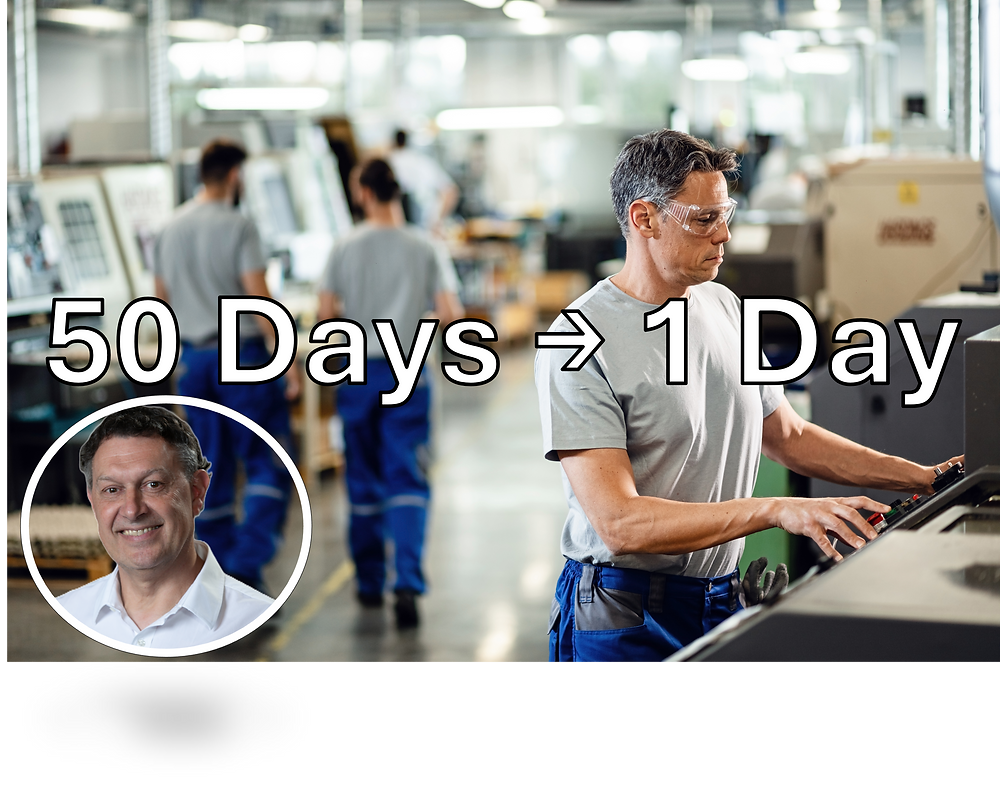
Not long ago, I was supporting a medical device manufacturer struggling to meet customer demand. Throughput in the cleanroom exceeded 50 days, and the organization believed they needed more equipment, more space, or more people. Instead of turning immediately to capital, I went to the production area and asked employees a single question: “If you could change one thing about your work, what would it be?”
Within minutes, ideas surfaced—practical, specific, actionable. Most required no new equipment or budget. They were rooted in the everyday frustrations that slowed people down or distracted them from delivering value.
With simple problem-solving structure and frontline leadership support, the team implemented these ideas rapidly. The outcome was dramatic. Throughput dropped from 50 days to just 1. Nothing magical occurred. What changed was that someone finally listened. The people who lived the problems every day were trusted to shape the solutions.
This is the essence of operational excellence: creating systems where people can speak up, experiment, and solve problems in real time.
Three Foundational Truths About Operational Excellence
Decades of improvement work have reinforced three principles that define successful manufacturing leadership:
1. The answers are already inside your facility.
Organizations frequently hire external consultants to diagnose issues that frontline teams already understand deeply. The people doing the work see the waste. They know the root causes. They also know the fastest path forward—if leaders are willing to ask and listen.
2. People are motivated to do great work.
The belief that employees lack motivation is one of the most damaging myths in manufacturing leadership. Most disengagement is the result of being ignored, not a lack of ownership. When leaders remove obstacles and invite participation, teams respond with energy, commitment, and creativity.
3. Systems outperform slogans.
Operational excellence is not about posters, slogans, or the right terminology. It is about systems that make it easier for people to see problems, address them quickly, and learn from them. When organizations build daily accountability, consistent coaching routines, and real-time visibility into performance, improvement becomes natural—not pushed.
These truths require leaders to shift from controlling activity to enabling capability. This shift can feel uncomfortable, especially in traditional command-and-control environments. But it is essential for performance that endures.
The Shift from Tools to Trust
Tools matter. But they are not the foundation. When organizations overemphasize tools without investing in people, the result is predictably disappointing. Employees begin to see improvement efforts as process-heavy, disconnected initiatives rather than meaningful progress. Trust erodes.
The organizations that sustain excellence behave differently. Leaders spend time at the front lines not to inspect, but to understand. They ask questions, remove barriers, and coach teams through challenges. They make learning visible, share discoveries, celebrate progress, and encourage experimentation. Tools then become accelerators rather than constraints—because they operate within a system built on respect and learning.
This is the true intent of Lean thinking: respect for people, combined with a structured approach to making work flow more smoothly and predictably.
What Operational Excellence Looks Like in Practice
When operational excellence is functioning as intended, it changes not just metrics but the daily experience of work. You will see:
Daily huddles where issues are raised openly and prioritized quickly
Visual boards that track problems, experiments, and learnings
Supervisors who coach rather than command
Cross-functional collaboration that addresses problems at the root
Leaders visiting the Gemba to learn, not to judge or enforce
Teams that test ideas rapidly and share what they learn
A culture where improvement is a shared responsibility
These behaviors are not the output of a program. They are the output of a system designed to empower people.
Start with the Right Question
If you are a manufacturing leader currently wrestling with missed deliveries, rising defects, or workforce disengagement, the temptation may be to deploy another tool or invest in new technology. Before doing that, try asking your team a simple question: “What would you change if you could?”
Then listen carefully. And act on what you hear.
That single question has the power to shift the direction of your organization. It communicates respect, builds momentum, and invites real partnership in problem-solving. You may be surprised by the ingenuity, practicality, and clarity of the ideas your team brings forward.
Conclusion: Excellence Grows from Within
Sustainable operational excellence begins with humility and curiosity. It grows through systems that help people identify problems, test ideas, and learn continuously. And it depends on leaders who remove obstacles, elevate frontline expertise, and create the conditions for success.
I have seen firsthand how transformational this shift can be. It improves performance, but it also strengthens morale, accountability, and pride. When people feel heard, they bring their best. When systems support them, they improve faster. When leaders create trust and learning, excellence follows.
Comments