

Lean Leadership: From Command to Collective Responsibility
The Evolution of Leadership
For decades, organizations have operated under a familiar model: a top-down, command-and-control approach. Executives define strategy. Middle managers translate strategy into tasks. Front-line teams execute. Success—or failure—flows along this rigid chain.
While this structure can deliver results in stable environments, it struggles in today’s fast-paced, unpredictable world. Change happens quickly, and organizations must adapt just as fast. Traditional hierarchies are too slow. Decisions are delayed. Problems persist longer than necessary.
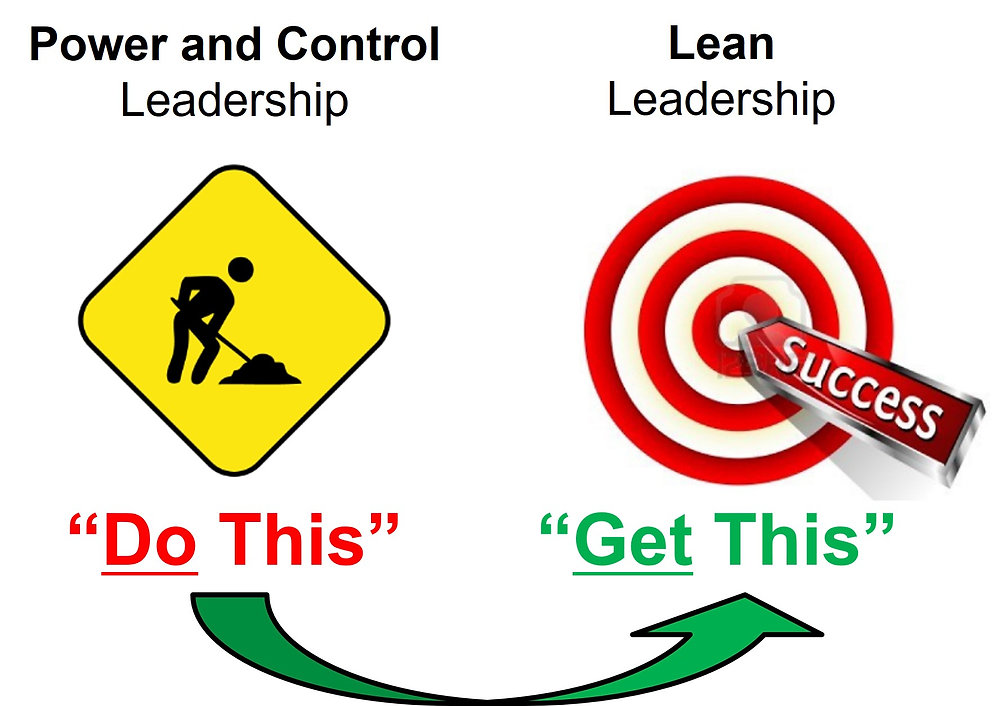
Lean leadership redefines this paradigm. Instead of issuing directives, Lean leaders focus on guiding teams toward shared goals, fostering ownership, accountability, and innovation at every level. The shift is subtle but profound: from task-based management to outcome-driven leadership, from control to empowerment.
Shifting the Focus: From Tasks to Outcomes
At the heart of Lean leadership is a fundamental question: Are we managing tasks, or are we managing results?
In traditional settings, leaders often define what must be done. They assign responsibilities, track compliance, and monitor outputs. While this provides clarity, it limits initiative. People focus on completing tasks rather than thinking critically about outcomes or exploring better ways to achieve them.
Lean leadership flips the script. Leaders set ambitious yet achievable targets, articulate a clear vision, and communicate the desired outcomes. Teams are then empowered to determine how they reach those outcomes. Autonomy replaces micromanagement. Engagement replaces compliance. The goal is not to control every step but to create conditions where teams can learn, experiment, and improve continuously.
This approach fosters creativity and resilience. When problems arise, team members are not waiting for direction—they are equipped to act, adapt, and collaborate to find solutions.
The Cascade of Responsibility
One of the most powerful concepts in Lean leadership is the cascade of responsibility.
In a traditional hierarchy, directives cascade downward—tasks are assigned and expected to be executed. In Lean organizations, responsibility cascades instead. Every team member understands their role in achieving organizational goals, not just in completing assigned tasks.
This cascade creates several powerful effects:
- Clarity of Purpose: Individuals see how their work contributes to the bigger picture.
- Empowered Decision-Making: Decisions are made closer to the point of action, enabling speed and agility.
- Collaborative Culture: Teams coordinate across functions, sharing information openly to achieve outcomes.
- Ownership and Accountability: People take pride in their work because they understand its impact on results.
Rather than relying solely on managerial oversight, the organization becomes self-regulating. Teams identify problems, propose solutions, and implement improvements, guided by clear goals and leadership support.
Lean Leaders as Mentors
In Lean organizations, leadership is not about issuing orders. It is about mentorship, support, and guidance.
Lean leaders:
- Observe and Engage: They spend time at the Gemba, where work actually happens, listening and learning from team members.
- Coach Problem-Solving: Instead of providing answers, they ask questions that challenge assumptions and stimulate critical thinking.
- Provide Feedback and Recognition: Continuous feedback helps teams refine approaches, while recognition reinforces behaviors that align with desired outcomes.
- Enable Experimentation: Leaders create safe spaces for testing ideas, learning from failure, and iterating improvements.
This mentorship approach transforms leadership from a role of authority to a role of influence and capability-building. Teams don’t just follow orders—they learn how to think, adapt, and improve.
Building a Culture of Learning and Innovation
When leadership shifts from command to shared responsibility, culture evolves naturally. Teams become active participants in creating value, not passive executors of orders.
Key elements of this cultural shift include:
- Transparency: Open communication across teams ensures everyone understands current performance, challenges, and priorities.
- Collaboration: Teams share insights, test ideas together, and co-create solutions.
- Continuous Learning: Experimentation becomes routine. Mistakes are viewed as learning opportunities, not failures.
- Empowered Experimentation: Employees at every level feel confident testing new ideas, knowing they will be supported, not punished.
The result is a self-sustaining improvement system. Teams do not rely solely on leaders to drive change—they actively engage in continuous problem-solving, generating better outcomes faster and more consistently.
Autonomy and Accountability: Two Sides of the Same Coin
Lean leadership balances freedom with accountability. Autonomy allows team members to explore solutions, while clear expectations and alignment ensure efforts contribute meaningfully to organizational goals.
When autonomy is paired with accountability:
- Teams own outcomes, not just tasks.
- Leadership can focus on coaching, mentoring, and strategic alignment rather than micromanaging.
- Decision-making becomes faster, smarter, and closer to the point of impact.
- Engagement, motivation, and morale increase because people see the tangible results of their efforts.
This balance is critical. Without autonomy, creativity is stifled. Without accountability, freedom leads to inconsistency. Lean leadership cultivates both, producing a workforce that is capable, responsible, and energized.
The Power of Alignment
Shared responsibility only works when goals are clear and aligned. Lean leaders ensure that:
- Organizational objectives are well understood at all levels.
- Team goals are directly linked to strategic outcomes.
- Individual roles are clarified in terms of contribution, not just task execution.
This alignment connects daily work to long-term strategy, ensuring that improvement efforts are consistent, coordinated, and purposeful. Teams understand not only what to do, but why it matters—a key driver of engagement and initiative.
From Compliance to Contribution
Traditional leadership often fosters compliance: follow instructions, meet deadlines, and execute tasks. Lean leadership fosters contribution: understand the problem, propose solutions, and take ownership of results.
This shift transforms engagement:
- Employees see themselves as co-creators of value.
- Front-line insights become central to improvement efforts.
- Leadership time is freed for mentoring, system improvement, and strategic thinking.
When contribution replaces compliance, innovation is no longer incidental—it becomes embedded in daily work.
Lean Leadership in Action: Practical Steps
Implementing Lean leadership requires intentional habits and routines:
- Daily Gemba Engagement
Walk the floor daily. Observe processes, talk to team members, and ask purposeful questions. The goal is understanding and coaching, not inspection. - Structured Problem-Solving
Use methods like PDCA or A3 thinking to guide improvement. Encourage teams to define problems, test solutions, and reflect on results. - Clear, Outcome-Oriented Goals
Communicate what success looks like, not just the steps to achieve it. Link individual contributions to larger organizational objectives. - Cascading Accountability
Ensure each layer of the organization understands its role in achieving goals. Make responsibility visible, measurable, and supported. - Continuous Coaching and Feedback
Engage teams in ongoing coaching. Recognize learning, support experimentation, and guide improvements without taking over. - Empower Decision-Making
Push decisions as close to the work as possible. Trust teams to solve problems while providing guidance and alignment.
The Impact of Lean Leadership
Organizations that adopt Lean leadership see tangible and intangible benefits:
- Higher engagement: Employees feel their contributions matter.
- Faster problem-solving: Decisions are made closer to the point of impact.
- Improved quality and delivery: Teams proactively identify issues and implement solutions.
- Greater innovation: People feel safe to test ideas and experiment.
- Sustainable continuous improvement: The system becomes self-sustaining as people learn and act independently.
Ultimately, Lean leadership is not a checklist or a program. It is a mindset, a practice, and a commitment to shifting from control to trust, from tasks to outcomes, and from compliance to contribution.
Conclusion: Leading Beyond Command
Lean leadership transforms organizations by empowering teams through shared responsibility, autonomy, and alignment. It replaces the hierarchical, directive model with a system where people at all levels understand their impact, act with purpose, and learn continuously.
By shifting the focus from tasks to outcomes and from control to coaching, organizations unlock human potential, accelerate improvement, and cultivate a culture of collaboration, innovation, and engagement.
In today’s dynamic business environment, the question is no longer whether leaders should delegate tasks—but whether they are fostering an environment where teams can take responsibility, learn, and innovate. Lean leadership is the answer.
Comments