

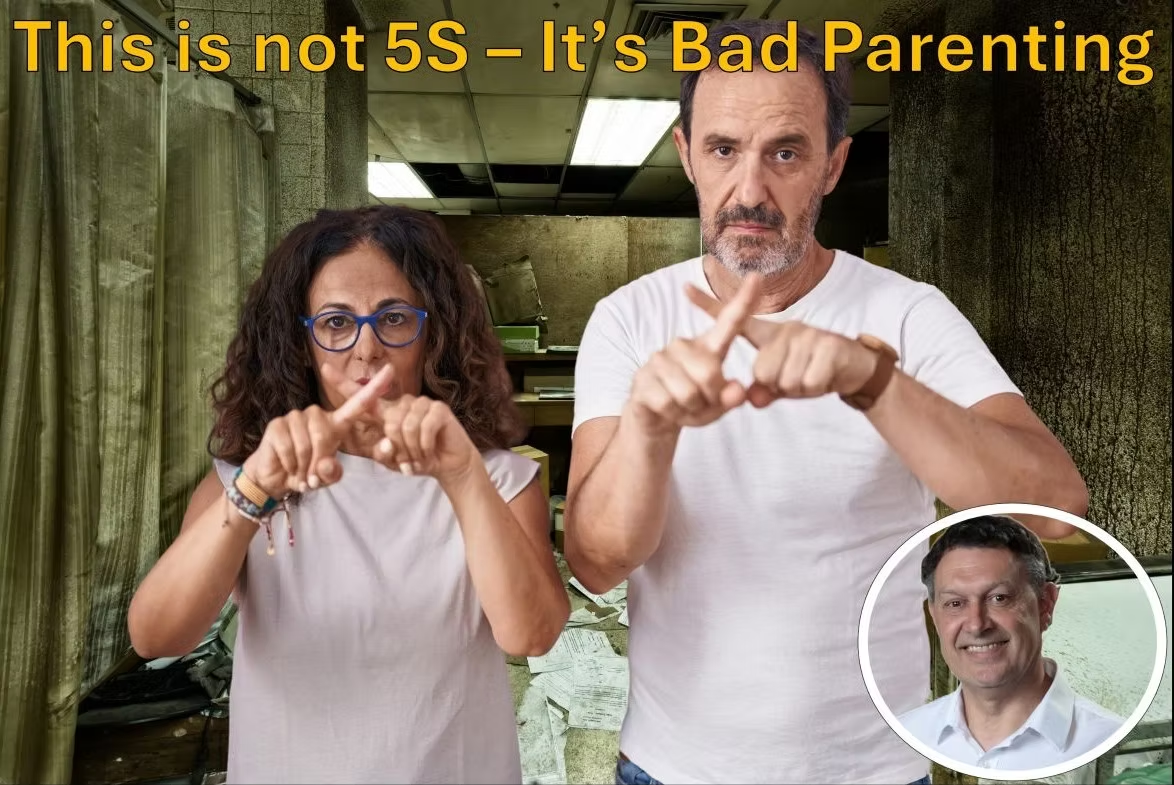
The Real Problem Isn’t 5S — It’s Ownership
If you’ve spent any time around Lean transformations, you’ve probably heard the familiar frustration: a leader walks into a workspace, sighs, and says, “Why can’t people just clean up after themselves? Keep things neat. It’s not that hard.”
It often sounds less like leadership and more like a parent scolding a teenager about their room. And, like that teenager, employees tend to respond the same way:
- Eye rolls.
- A quick cleanup right before the next inspection.
- No lasting change.
The truth is, most leaders in this position don’t have a 5S problem. They have an ownership problem. More specifically, they misunderstand what 5S is and how it functions within a Lean management system.
When 5S becomes a checklist, a compliance exercise, or a judgmental walkthrough, it loses its purpose. It becomes a source of frustration for both leaders and teams.
5S Lean management is not about control. It’s about creating the conditions for people to do great work with confidence, clarity, and purpose.
What 5S Lean Management Really Means
5S is commonly introduced as five Japanese terms:
- Seiri (Sort)
- Seiton (Set in Order)
- Seiso (Shine)
- Seiketsu (Standardize)
- Shitsuke (Sustain)
In practice, 5S is a system for workplace organization that helps teams eliminate waste, detect problems quickly, and reduce variability in how work is performed. But if you strip away the labels, the essence of 5S is not cleaning—it’s designing a work environment where the work itself becomes easier to see, understand, and improve.
That distinction is critical. When misunderstood, 5S gets reduced to:
- Tidy workbenches.
- Floor tape and color-coded labels.
- Whiteboards listing chores.
These tools can support 5S, but they are not the heart of it.
At its core, 5S is about building clarity into the work environment so that:
- Problems are visible before they escalate.
- Tools and materials are exactly where they’re needed, not just where they look neat.
- The workspace communicates flow and sequence without constant explanation.
- People take ownership of their environment because it supports their success.
The Cost of Confusing 5S with Cleanliness
Returning to the parenting metaphor: telling a teenager to clean their room without explaining why leads to surface-level compliance at best. They sweep up because someone is watching, but they don’t internalize the habit. They’re responding to authority, not ownership.
In many Lean implementations, this is exactly what happens. Cleanliness is mistaken for improvement. Teams comply because they’re instructed to, but the system itself doesn’t become better.
When 5S is treated as surface-level order, you often hear phrases like:
- “They just don’t care.”
- “We always have to remind them.”
- “They only clean when someone’s watching.”
This compliance theater produces temporary visual results but doesn’t improve performance. Worse, it reinforces a top-down, command-and-control culture—the exact opposite of Lean thinking.
In Lean environments, rules alone don’t create engagement. People follow rules when they understand the purpose behind them. Ownership comes when the system is meaningful, and teams see how it supports their work.
Designing Spaces That Enable Success
Effective 5S systems are almost invisible. They don’t demand attention because they work. Tools are within reach. The sequence of work is obvious. Labels are confirmations, not reminders.
The environment supports the work. People don’t have to memorize procedures or guess the next step. And when something is out of place, it’s easy to see—and fix.
Practical examples include:
- A nurse who never wastes time searching for gauze because the cart is replenished based on actual usage.
- A machinist who immediately knows a part is missing or out of spec due to visual cues built into the workstation.
- A team that redesigns tool layouts based on workflow, not appearance in a catalog.
These are not aesthetic wins—they are built-in performance gains. The environment itself guides behavior and reduces the need for constant oversight.
The Connection Between 5S and Problem-Solving
One of 5S’s greatest strengths is its role as a foundation for continuous improvement.
When workspaces reflect standard work and logical flow, deviations are immediately visible. You don’t need supervisors or auditors to tell you something is wrong—the system itself alerts you. And once a problem is visible, teams can act because they understand the purpose behind the setup.
5S becomes a lens for scientific thinking:
- Why is this item here?
- Is this the best location for it?
- What problems are we preventing—or creating—by this layout?
- How can we test a better way?
These are not questions about cleanliness. They are questions about performance, learning, and system design.
By shifting focus from tidiness to problem visibility, 5S becomes a tool for engagement and improvement, rather than a series of mandates to be obeyed.
Shifting the Leadership Mindset
When 5S efforts stall, leadership behavior is often the key lever—not by enforcing harder, but by reframing the problem.
Instead of asking, “Why aren’t people cleaning up?” ask:
- Do people understand the purpose behind our 5S efforts?
- Did we design this environment with their input?
- Are we using 5S to enable improvement or just monitor compliance?
- What patterns in the layout are helping—or hindering—performance?
It’s the same approach a parent might take: involve the person in defining expectations, help them see the space as their own, and guide them in building habits rather than demanding obedience.
Leaders who view 5S as a cultural enabler can unlock powerful changes. They coach teams to recognize waste, identify flow disruptions, and spot problems embedded in the work environment. Leadership shifts from enforcement to design, from control to enabling excellence.
5S That Lasts: From Control to Clarity
Sustainable 5S systems don’t rely on posters, reminders, or top-down inspections. They rely on shared purpose, logic, and trust.
When people help design their environment, they:
- Take ownership.
- Adapt layouts as work evolves.
- Use the system to improve processes continually.
Conversely, when 5S is a requirement imposed without understanding, it rarely lasts. Surface-level order disappears once the initial focus shifts. Ownership is not about appearance—it’s about thinking and engagement.
5S as a System, Not an Event
A common trap is treating 5S as a one-time event—a 5S blitz or spring-cleaning effort. These can create short-term visibility and energy but rarely yield sustainable improvement.
True 5S Lean management is a living system. It is maintained through daily routines, visual standards, and continuous feedback. It is integrated with problem-solving, coaching, and improvement practices.
5S isn’t something you do once. It is something you live. It becomes part of the rhythm of the work, the culture of the team, and the DNA of the system.
Summary: Rethinking 5S for Lasting Impact
If your 5S system feels like nagging, inspections, and resistance, the issue is not your people—it is your approach.
5S Lean management is not about keeping things tidy. It is about creating clarity, surfacing problems, and enabling improvement. It is about designing spaces that help people succeed without constant reminders.
When implemented with purpose, 5S becomes a foundation for operational excellence. It invites ownership, accelerates learning, and supports a culture where improvement is everyone’s responsibility.
The next time you hear, “We just need people to clean up after themselves,” remember the parenting analogy. The goal isn’t compliance—it’s capability. Build environments where responsibility and ownership become the norm, and you’ll create lasting performance gains.
Comments