

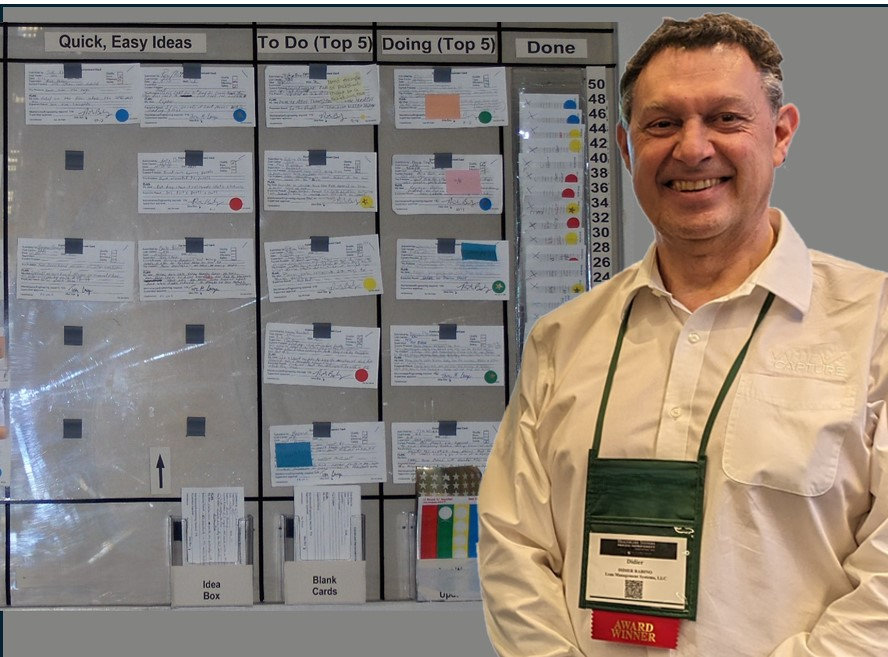
Harnessing Frontline Innovation: Turning Ideas into Action
Innovation and continuous improvement thrive when employees are empowered to share and act on their ideas. Organizations that cultivate a culture of collaboration and engagement often see measurable improvements in efficiency, quality, and employee satisfaction.
The Power of Frontline Innovation
Research by Alan Robinson and Dean Schroeder, summarized in Ideas Are Free, shows that frontline employees often generate the most impactful solutions because they are closest to the work and understand operational challenges deeply. Yet, many organizations fail to tap this resource by not providing structured ways for employees to contribute their insights.
When teams are given the opportunity and tools to test their ideas, they solve immediate problems, develop stronger problem-solving skills, and foster a culture of ownership in continuous improvement efforts.
Building Systems That Foster Trust and Experimentation
To fully leverage employee-driven innovation, organizations must create systems that encourage trust and experimentation. Structured improvement methodologies, such as the Plan-Do-Check-Act (PDCA) cycle, are highly effective. They allow teams to test ideas on a small scale, measure results, and refine solutions before broader implementation.
Key Strategies for Effective Team Collaboration
1 - Create a Transparent Improvement System
- Use visual boards to track and communicate ideas.
- Keep submissions simple; avoid complicated forms or approval processes.
2 - Encourage Small, Incremental Improvements
- Prioritize actionable changes that can be tested and refined quickly.
- Small wins build momentum, boost engagement, and reinforce continuous improvement.
3 - Make Experimentation Safe and Supported
- Foster a blame-free environment where trying new ideas is valued.
- Recognize both successes and lessons learned from unsuccessful attempts.
4 - Support Implementation Through Coaching
- Provide training on problem-solving tools such as A3 thinking, root cause analysis, and visual management.
- Encourage cross-functional collaboration to refine and scale effective solutions.
The Business Impact of Engaged Teams
Organizations that actively engage employees in problem-solving see clear benefits:
- Higher productivity through more efficient processes
- Stronger morale and retention as employees see the impact of their contributions
- Improved customer satisfaction through continuous refinement of products and services
- Greater agility in adapting to changing business conditions
Take Action: Making Ideas Count
Fostering collaboration is not just about generating ideas—it’s about creating a system where ideas are tested, refined, and implemented effectively. Leaders play a critical role in providing the structure, coaching, and environment necessary to turn frontline insight into tangible results.
Reflection: How does your team test new ideas and continuously improve processes?
Share your experiences and strategies below.
Comments